












Theme Song: “Factory,” Bruce Springsteen
My toothpaste tasted like chalk. Even worse, I had to scrape it off my teeth. This went on for three days until I used a Spanish-to-English translator to decipher the words on the side of the tube—denture glue!? When it rains it pours, the saying goes, and this was only a drizzle of what was to come.
It is tempting to idealize our project and tell you how glamorous it is to build a luxury resort on a private island in the crystal-clear waters of the Caribbean. Sounds like a fairy tale, right? The truth is, at times we’re on the wrong end of that fairy tale, like the big bad wolf is breathing down our necks!
It’s no wonder, I suppose. We are building in a foreign land where the language and culture are a mystery to us. The resort will be 100 percent off the grid, which requires our own water, power, and wastewater treatment systems.
Our island is a mangrove swamp, which means our buildings need to be positioned on pilings. We need literally tons of fill dirt and copious channels to reroute water.
And if that isn’t enough, most of our structures are being constructed over the water, nearly doubling our building costs.
The First Containers Arrive from Bali
We were elated at the arrival of the first two containers from Bali! They contained the restaurant and three villas. The overwater foundations were not complete, but we had prepared a temporary bodega on the island to store them.
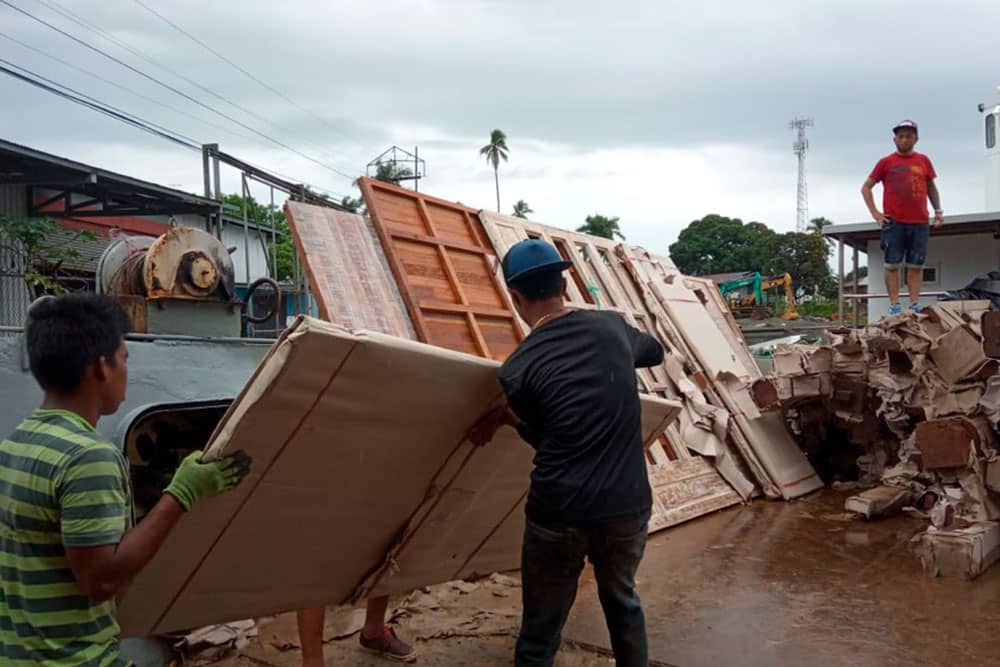
The team in Bali had painstakingly wrapped, color-coded, and labeled each individual piece. They also provided a manual with specific handling instructions. For example, “When transporting the materials during bad weather, always cover with a tarp. If the cartons become wet, it can stick to the wood.” And, “When unloading the container and transporting the panels, never lay them down flat, always keep them up straight. Additionally, when storing them, make sure they are 100 percent straight up against a wall or poles.”
Then we received the following picture of the containers being unloaded. The exquisite teak wood with over four thousand hours of hand carving was laying on the dock in the rain! The workers were doing everything wrong, but of course the buck stops with me. I failed to anticipate this situation.

Fixing It
I was in Michigan at the time and couldn’t sleep for two nights. The message from our team in Bali said simply, “Our hearts are broken.”
The unloading of the first container on the mainland and transportation to our island by barge took sixteen hours! The rain drizzled all day making work miserable. But the real trouble came about 3:00AM, within a half hour of finishing up, when the rain came down in sheets, soaking everything.
Much of the restaurant would require refinishing and some of the damaged items would need to be replaced. Worst of all, during the mayhem no one was taking care to ensure the contents were kept organized. Later it would take three men two weeks to reorganize the contents of the bodega so they could find things when assembling the villas and the restaurant.
Needless to say, we have since found ways to ensure that our precious cargo from Bali is handled correctly.
Labor Unrest
I received the following WhatsApp text from a friend in Bocas Town on a Thursday night at 11:46PM: “TODAY – the syndicate spoke about your project at the town hall. They are saying that your project is not paying the employee fees properly. The syndicate has requested an inspection from the labor and social security departments. Watch out!”
This was our worst nightmare and we were taken completely by surprise. I have watched many projects stop mid-construction in Central America and left to rot. We couldn’t afford to be one of them.

A high-integrity Panamanian contractor named Virgilio is leading our project. Virgilio employs eight men of his own but relies primarily on subcontractors due to the size of the project. It is not unusual to have fifty or more workers on the island at any given time; the peak was over seventy. We thought it was the subcontractor’s responsibility to abide by the Panama labor laws. As it turns out, there were issues that needed to be corrected immediately.
After a week of anguish, Virgilio, Daniel (our project attorney), Virgilo’s labor attorney, and the Minister of Labor met with all the workers on the island for collective bargaining. After hours of negotiation, every worker signed an agreement that brought us back into compliance. We all breathed a sigh of relief!

It is easy to get frustrated and point fingers when it comes to things like the mishandling of Balinese furnishings, labor issues, and general miscommunication. However, the root cause can usually be traced to language barriers and cultural differences. Patience, over-communication, and forgiveness is generally the best formula for success.
The scale of this resort requires an enormous amount of physical labor. For example, it takes four men a full day to install two cement pilings. When the project is finished Bocas del Toro will have over one thousand pilings, which is 16,000 man-hours! How can we be anything but overwhelmed with gratitude for our Panamanian friends and workers as they help us to make our dream come true, one cement a piling at a time.
Have you ever worked with someone from a different culture? What differences did you experience compared to what you expected? How did you resolve the differences?


